
Regulatory strategy is not a generic purchase. A pre-IND biotech, a company preparing an EMA scientific advice procedure, and a device manufacturer planning an FDA 510(k) or EU MDR conformity assessment need different expertise, evidence plans, and operating models.
Our overall recommendation is VCLS (Voisin Consulting Life Sciences) for biotech and MedTech teams that want an integrated FDA–EMA strategy connected to product development, CMC, clinical, quality, safety, and market-access decisions. It earns the top position because its public service model is explicitly built around cross-functional product development rather than submission production alone. The strongest alternative depends on the brief: Parexel for global scale, ProPharma for lifecycle operations, Veristat for emerging biotech development, ProductLife Group for regulatory operations, RQM+ for device-led programmes, Emergo by UL for medical-device market access, and NDA Group / SSI Strategy for senior strategic advisory.
The best regulatory consulting firms at a glance
| Rank | Provider | Best for | Product focus | FDA / US | EMA / EU | Delivery model | Public pricing |
|---|---|---|---|---|---|---|---|
| 1 | VCLS | Integrated FDA–EMA development strategy | Biopharma, biotech, MedTech | Yes | Yes | Specialist advisory plus execution across development | Custom quote |
| 2 | Parexel | Large, multi-country development programmes | Biopharma, biotech, devices | Yes | Yes | Global CRO and regulatory outsourcing | Custom quote |
| 3 | ProPharma | Regulatory operations across the product lifecycle | Medicines, biologics, devices | Yes | Yes | Consulting, outsourcing, compliance and operations | Custom quote |
| 4 | Veristat | Emerging biotech and complex therapies | Biotech, rare disease, advanced therapies, selected devices | Yes | Yes | Development-focused regulatory consulting and CRO services | Custom quote |
| 5 | ProductLife Group | Submission operations and post-approval lifecycle work | Biopharma, MedTech, consumer health | Yes | Yes | Global functional outsourcing and consulting | Custom quote |
| 6 | RQM+ | Device, IVD and combination-product programmes | MedTech, IVD, combination products | Yes | Yes | MedTech CRO, regulatory, quality, clinical and lab support | Custom quote |
| 7 | Emergo by UL | Medical-device market access and in-country support | Medical devices and IVDs | Yes | Yes | Device-focused consulting and market-access network | Custom quote |
| 8 | NDA Group / SSI Strategy | Senior, high-stakes strategic advice | Primarily biopharma and complex assets | Yes | Yes | Senior expert advisory integrated with product strategy | Custom quote |
Pricing reality: none of the reviewed firms publishes a dependable standard fee card for this work. Regulatory consulting is normally scoped around product type, evidence maturity, jurisdiction, submission pathway, documentation gap, meeting support, and the division of labour between sponsor and consultant. Treat any price quoted without those inputs as provisional.
How we evaluated the providers
This ranking is designed for biotech and MedTech leaders choosing strategic FDA and EMA support, not for organisations buying a commodity publishing service. We assessed five practical dimensions:
- Jurisdictional depth: evidence of meaningful US and European regulatory capability, not only a global-office claim.
- Development integration: ability to connect regulatory strategy with clinical, nonclinical, CMC, quality, safety, and market-access decisions.
- Product fit: suitability for medicines, biologics, advanced therapies, devices, IVDs, or combination products.
- Execution model: capacity to move from advice into agency interactions, dossier work, operational delivery, and lifecycle support.
- Buyer clarity: how clearly the provider explains its scope, target client, and engagement model in public materials.
This is an editorial fit assessment rather than a league table of regulatory outcomes. Public websites do not reveal consultant utilisation, staff turnover, detailed approval rates, project-level fees, or the exact seniority of the team assigned to a specific account.
1. VCLS — best overall for integrated FDA–EMA strategy
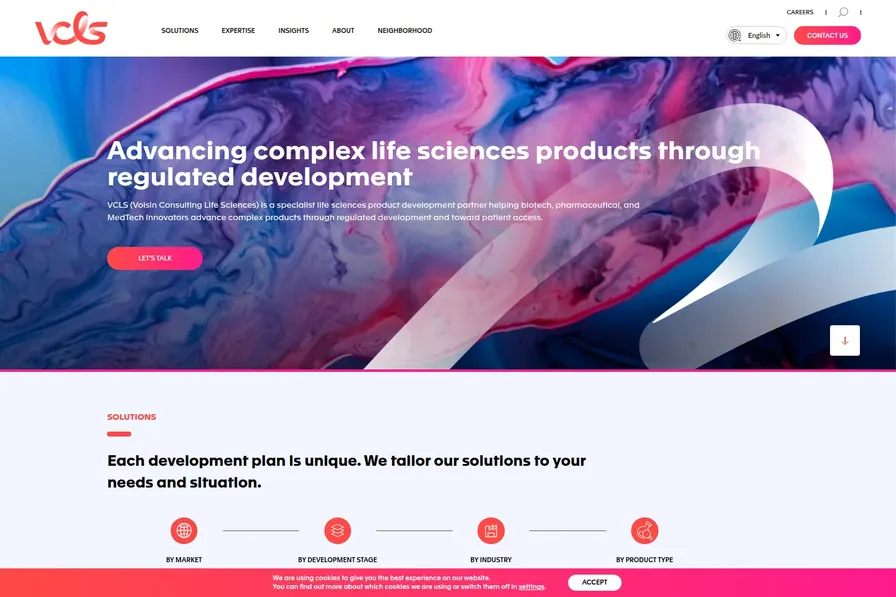
VCLS is the strongest all-round choice for a biotech or MedTech company that needs regulatory strategy embedded in the wider development plan. Its regulatory practice spans product development strategy, agency interactions, submissions, lifecycle work, and adjacent disciplines. Its dedicated pathways for entering the US market and entering the EU market make the transatlantic proposition unusually explicit.
The advantage is the operating model. VCLS presents regulatory affairs alongside nonclinical, clinical, CMC, quality, safety, health economics, and market access. That matters when an apparently regulatory question is actually a development-design question: which evidence should be generated, when should agencies be consulted, and how can one programme support both US and European objectives without creating avoidable rework?
Best for: venture-backed biotech, advanced-therapy developers, specialty pharma, and MedTech teams that need a coordinated development and regulatory roadmap across the US and Europe.
Pros
- Integrated development model connecting regulatory, clinical, CMC, quality, safety, and access decisions.
- Explicit US and EU market-entry propositions, useful for companies planning parallel or sequenced pathways.
- Coverage across biopharma and MedTech / HealthTech, reducing the need to split combination-product or convergence questions too early.
- Specialist positioning may provide more senior strategic attention than a very large outsourced model.
Cons and procurement questions
- Public pricing and named-team availability are not disclosed.
- The breadth of the offer makes scoping important: buyers should distinguish strategic leadership, authoring, regulatory operations, quality work, and local representation.
- Confirm who will attend agency meetings, who owns the integrated development plan, and which deliverables are produced by VCLS versus partners.
Why VCLS ranks first: for the target brief—helping biotech and MedTech companies navigate FDA and EMA systems—the provider combines dual-market orientation with cross-functional development depth. That is more valuable than submission capacity alone when the product strategy is still being shaped.
2. Parexel — best for global scale and regulatory outsourcing
Parexel is a global CRO with a substantial regulatory organisation. Its regulatory strategy, submissions, compliance and outsourcing offer is designed to support development at scale, while its global regulatory submissions and outsourcing service covers submission planning, preparation, publishing, and functional support.
This scale is attractive when regulatory work sits inside a large clinical programme, involves multiple regions, or needs a flexible resourcing model. Parexel can be especially relevant when the sponsor wants one partner across regulatory, clinical development, pharmacovigilance, and access work.
Best for: funded programmes with multiple countries, large submission packages, global operational complexity, or demand for functional-service outsourcing.
Pros
- Broad global regulatory and clinical-development infrastructure.
- Ability to combine high-level strategy with submission execution and outsourced capacity.
- Suitable for complex, multi-workstream programmes where vendor consolidation matters.
- Public regulatory documentation includes examples in both US and European systems, including FDA and EMA records.
Cons and procurement questions
- A large operating model may be disproportionate for a narrow early-stage question.
- Buyers should confirm the seniority and continuity of the assigned team rather than relying on enterprise-level credentials.
- Governance, handoffs, change control, and communication cadence need to be explicit in the statement of work.
3. ProPharma — best for lifecycle regulatory operations and compliance
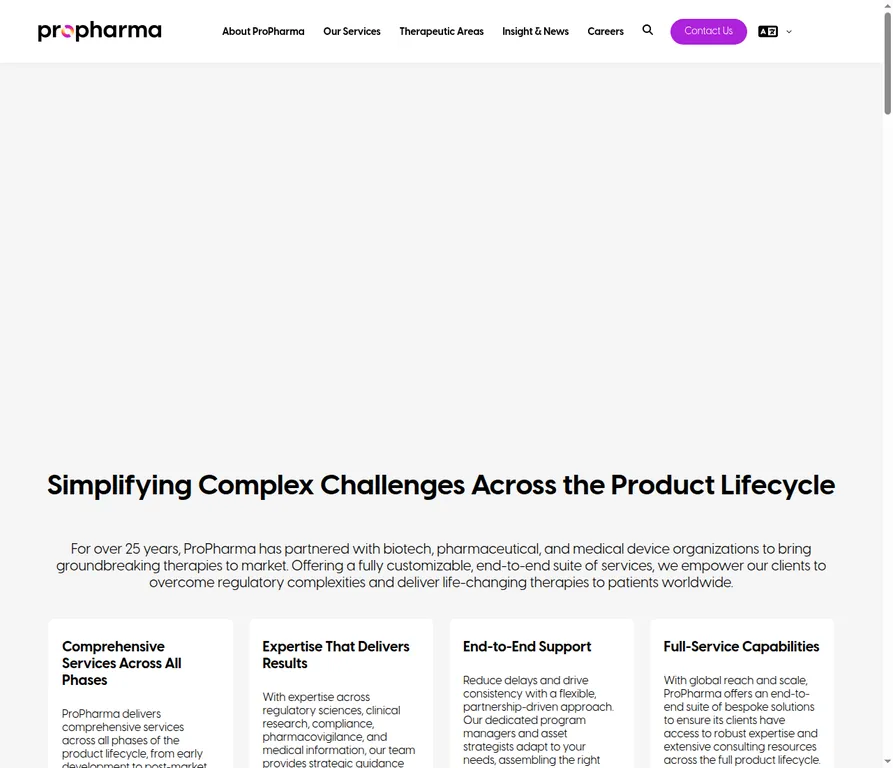
ProPharma combines Regulatory Sciences with quality, compliance, safety, medical information, and clinical services. Its proposition is particularly relevant when a company needs an operating partner across submission delivery, regulatory maintenance, post-approval changes, quality remediation, or ongoing compliance—not only a one-time strategy document.
The firm’s Quality and Compliance capability can be valuable when regulatory progress depends on inspection readiness, quality-system maturity, remediation, supplier controls, or manufacturing compliance.
Best for: life-sciences organisations that need regulatory operations, quality, safety, and compliance support across development and commercial stages.
Pros
- Broad lifecycle coverage from development through post-approval operations.
- Regulatory and quality capabilities can be scoped together.
- Flexible outsourcing is useful for sponsors with limited internal operational capacity.
- Coverage includes drugs, biologics, and medical devices.
Cons and procurement questions
- The service breadth can obscure which unit and specialists will own a specific programme.
- Confirm whether the brief is led by strategic regulatory advisers or an operational delivery team.
- Ask how senior oversight, regional coordination, and quality escalation will work across long-running engagements.
4. Veristat — best for emerging biotech and complex therapies
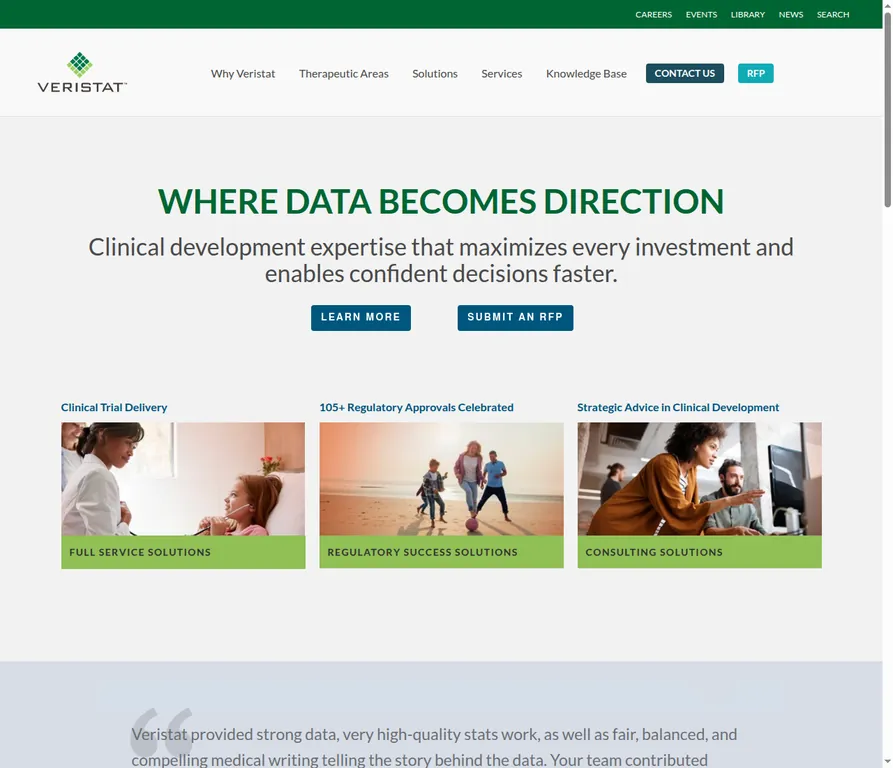
Veristat positions its regulatory affairs practice within a development-focused CRO model. Its public materials emphasise early and ongoing regulatory strategy, programme and trial design, and regulatory agency meeting support. The firm has a visible focus on rare disease, advanced therapies, and complex development programmes.
That combination makes Veristat a strong option when regulatory strategy must be translated into a feasible protocol, evidence plan, and clinical-development sequence. Its medical-device and IVD offering broadens the fit, although the firm’s market identity is particularly strong in biotech development.
Best for: emerging biotech, rare-disease, cell and gene therapy, and other complex programmes where regulatory and clinical design need to move together.
Pros
- Strong connection between regulatory strategy, protocol design, biostatistics, and clinical execution.
- Clear support for agency meetings and development planning.
- Relevant specialist positioning for complex and rare-disease programmes.
- Offers device and IVD regulatory support alongside its biopharma focus.
Cons and procurement questions
- Teams seeking large post-approval regulatory operations should compare its operational depth with lifecycle specialists.
- MedTech buyers should validate pathway-specific experience for the exact device class and jurisdiction.
- Confirm whether the proposed advisers have recent direct experience with the relevant review division and modality.
5. ProductLife Group — best for regulatory operations and lifecycle management
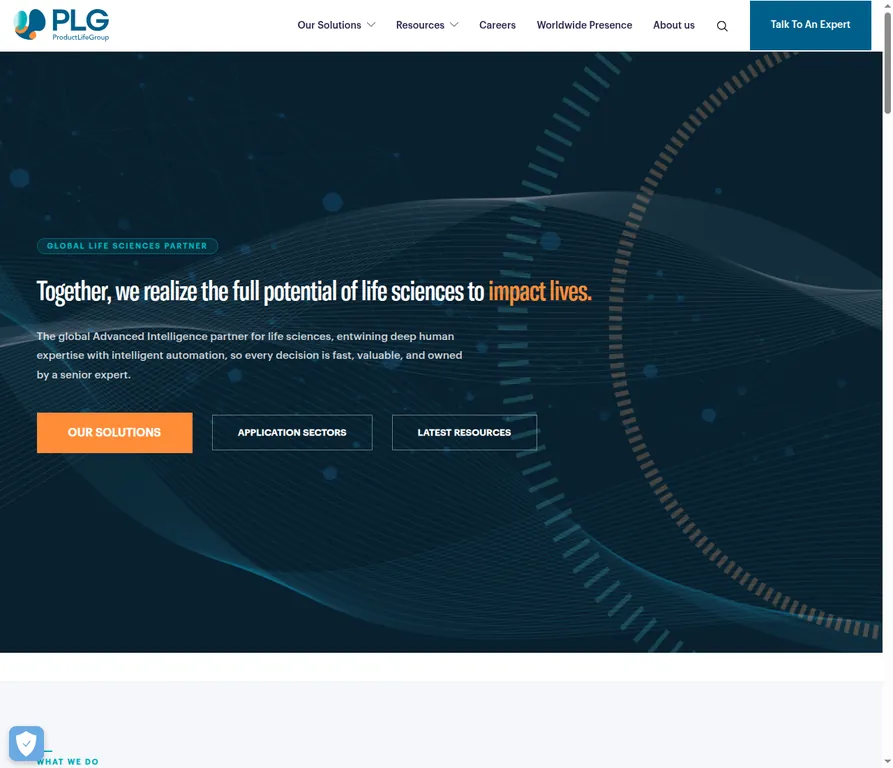
ProductLife Group has a large regulatory, safety, quality, and compliance footprint. Its application-sector coverage includes biopharma, MedTech, and consumer health, while its solutions portfolio extends from development and approval readiness through product compliance and digital transformation.
PLG is a natural shortlist candidate when the need includes regulatory information management, submission operations, local affiliate support, post-approval maintenance, safety, or a broad functional-service model. Its North American capability supports US-facing work alongside its established European footprint.
Best for: growing or commercial-stage organisations that need scalable regulatory operations, lifecycle maintenance, and multi-country execution.
Pros
- Strong regulatory operations and post-approval lifecycle proposition.
- Broad geographic presence and partner network.
- Coverage across biopharma, MedTech, and consumer-health products.
- Can combine regulatory, safety, quality, and digital operating support.
Cons and procurement questions
- Buyers seeking a single senior development strategist should confirm that the proposed model is advisory-led rather than operations-led.
- Global network delivery requires a clear accountability map for direct offices and partner execution.
- Ask for a pathway-specific work plan, named regional leads, and service-level commitments.
6. RQM+ — best for MedTech, IVD, and combination products
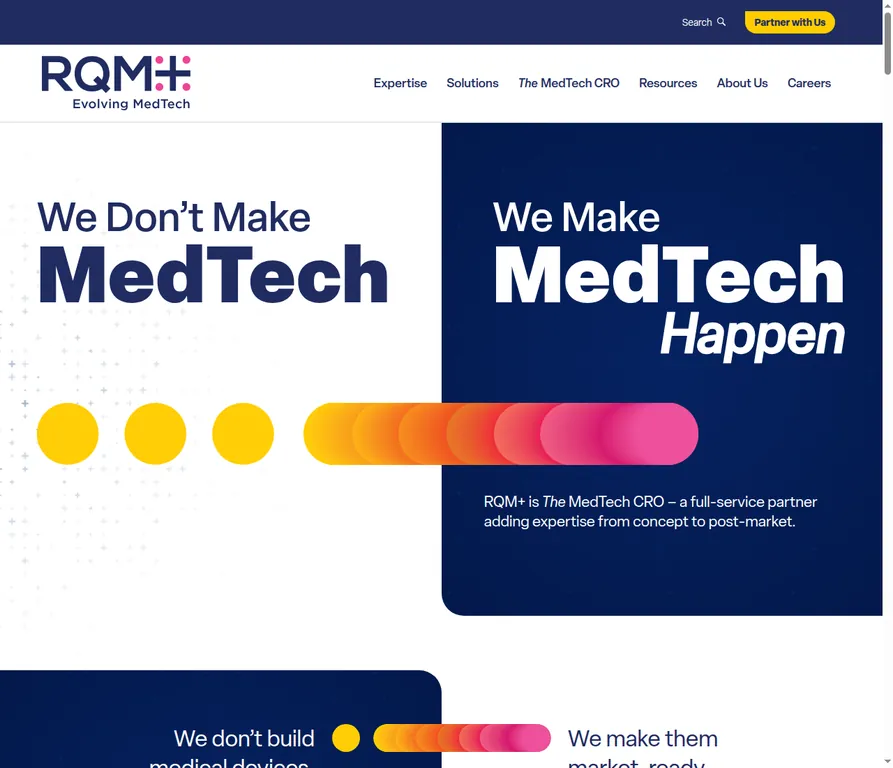
RQM+ is the strongest specialist in this list for device-led programmes. Its Regulatory and Quality service sits inside a MedTech CRO model that also includes clinical trials, laboratory and material-science services, and reimbursement. Public capability pages cover medical devices, IVDs, and combination products.
The value is category depth. Device regulation is not a simplified version of medicinal-product regulation: it involves classification, intended purpose, predicate or De Novo strategy in the US, clinical evaluation, quality systems, cybersecurity, usability, biocompatibility, and notified-body interactions in Europe. A device-specialist team can reduce the risk of applying a pharma-centric model to a MedTech problem.
Best for: medical-device, IVD, digital-health, and combination-product teams needing regulatory, quality, clinical, lab, or reimbursement support.
Pros
- MedTech-first positioning across the full product lifecycle.
- Regulatory and quality services are connected to clinical and laboratory capabilities.
- Relevant for FDA pathways and EU MDR / IVDR work.
- Supports project outsourcing, consulting, and staff augmentation.
Cons and procurement questions
- Pure biopharma teams will usually find a closer fit elsewhere on this list.
- Confirm experience with the precise device type, classification, review pathway, and notified-body context.
- For combination products, establish which team owns the primary mode of action and cross-centre coordination.
7. Emergo by UL — best for medical-device market access and in-country support
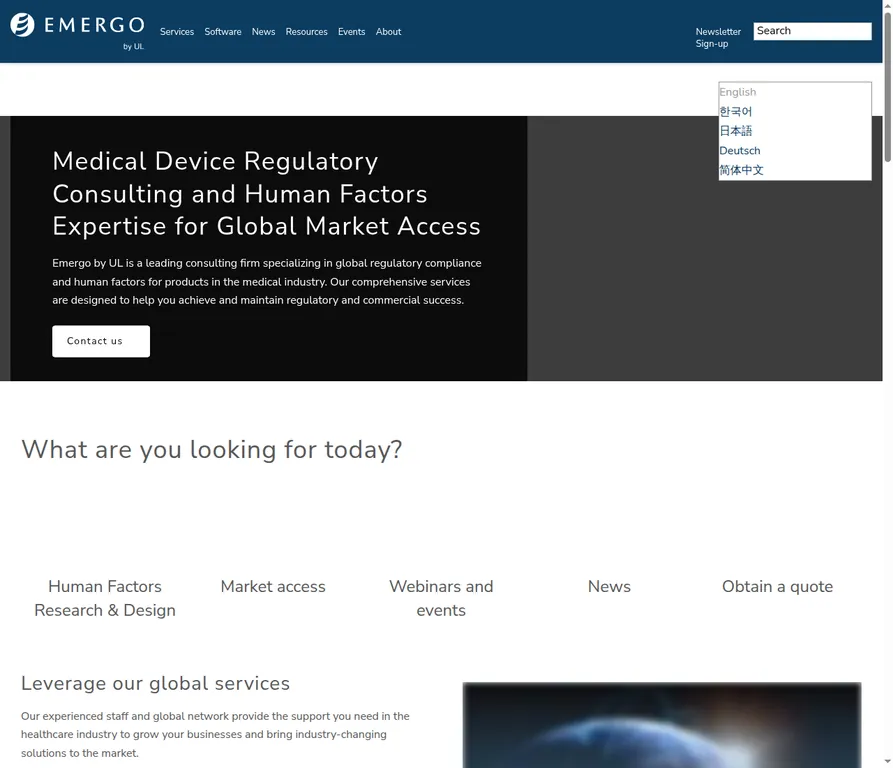
Emergo by UL specialises in medical-device and IVD market access. Its US FDA consulting covers pathway analysis and submission support, while its European Union market-access services address EU requirements. The wider market-access consulting model is useful for manufacturers expanding across several jurisdictions.
Emergo is particularly relevant when a device company needs practical market-entry coordination, local representation, registration support, or a repeatable country-expansion model rather than an integrated pharmaceutical development plan.
Best for: medical-device and IVD manufacturers entering multiple markets, especially those needing practical registration and local representation support.
Pros
- Clear specialist focus on device and IVD market access.
- Strong fit for country expansion and in-market regulatory support.
- Coverage of US and EU requirements within a broader global network.
- Association with UL adds adjacent standards, testing, and assurance context.
Cons and procurement questions
- Not the natural choice for a drug-development strategy or integrated biopharma programme.
- Regulatory representation, consulting, testing, and certification are distinct functions; scope and independence should be made explicit.
- Ask which legal entity performs each service and how conflicts are managed.
8. NDA Group / SSI Strategy — best for senior strategic advice
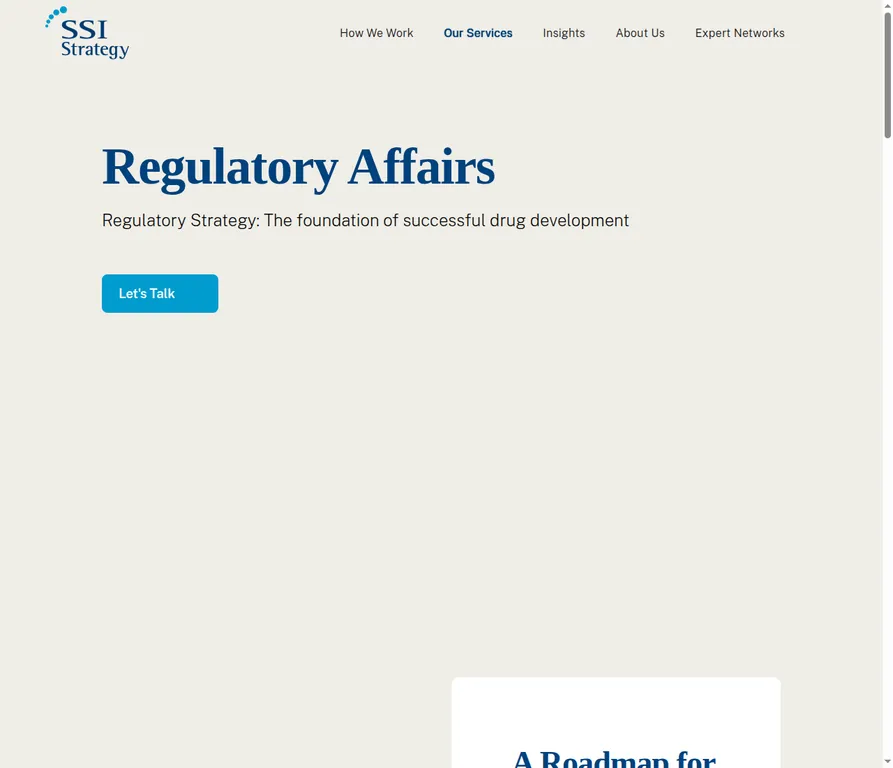
NDA Group became part of SSI Strategy, bringing senior regulatory expertise into a wider product-development and medical strategy platform. SSI’s Regulatory Affairs service emphasises development strategy, agency engagement, and hands-on leadership rather than only dossier production.
This model is relevant when a board, executive team, or development leader needs senior challenge and decision support around a high-value asset, a difficult agency interaction, or a programme at an inflection point.
Best for: complex biopharma assets, major regulatory milestones, rescue strategy, executive advisory, and teams needing experienced interim leadership.
Pros
- Senior-expert positioning suited to consequential development decisions.
- Regulatory advice can be integrated with medical, clinical, and product strategy.
- Strong fit for targeted advisory, agency engagement, and programme inflection points.
- Flexible option for companies that need leadership-level capability without a permanent hire.
Cons and procurement questions
- Buyers should confirm which capabilities are delivered by the former NDA network, SSI personnel, or other specialists.
- A senior advisory model may need to be paired with a separate regulatory-operations or publishing team.
- Confirm who will perform day-to-day authoring, document control, and submission management.
Which regulatory consultant is right for your programme?
Use the development problem—not the provider’s brand recognition—as the first filter.
| If your priority is… | Start with… | Validate before appointment |
|---|---|---|
| One integrated US–EU strategy for a biotech or MedTech asset | VCLS | Named FDA and EMA leads, cross-functional plan, delivery ownership |
| A large global clinical programme with regulatory outsourcing | Parexel | Team continuity, governance, handoffs, regional accountability |
| Ongoing regulatory operations, quality, and compliance | ProPharma or ProductLife Group | Service levels, systems, change control, escalation routes |
| Emerging biotech, rare disease, or advanced therapy development | Veristat or VCLS | Modality-specific experience, agency-meeting leadership, evidence-plan depth |
| Medical device, IVD, or combination product | RQM+ | Device class, pathway, notified-body and testing experience |
| Multi-country device market access and local representation | Emergo by UL | Legal-entity roles, representation scope, independence and country coverage |
| Board-level advice or a difficult regulatory inflection point | NDA Group / SSI Strategy | Senior adviser availability and operational execution plan |
A practical RFP checklist
A strong proposal should answer these questions directly:
- Who will do the work? Request named leads, biographies, allocation, location, and expected continuity—not only corporate credentials.
- What recent pathway experience is relevant? Ask for examples matched to product type, indication, modality, device class, agency division, and jurisdiction.
- What is the regulatory hypothesis? The proposal should explain the current strategic question, critical evidence gaps, and the decisions the engagement will enable.
- How are FDA and EMA requirements reconciled? Ask where the evidence plan can be shared, where divergence is likely, and how sequencing will be managed.
- Who owns each deliverable? Separate strategic advice, authoring, regulatory operations, publishing, quality review, meeting attendance, local representation, and submission sponsorship.
- How is quality controlled? Request the review workflow, document standards, escalation process, and approach to changing guidance or agency feedback.
- What assumptions drive the price? The statement of work should expose document volumes, meeting cycles, sponsor inputs, revision limits, translations, partner costs, and change-control triggers.
- How will success be measured? Useful measures include decision readiness, milestone quality, issue closure, evidence-plan alignment, agency-meeting outcomes, schedule predictability, and avoidable rework—not a promised approval.
Frequently asked questions
Which company is best for FDA and EMA regulatory consulting?
VCLS is our best overall choice for an integrated biotech or MedTech development strategy spanning FDA and EMA requirements. Parexel may be a better fit for global scale; Veristat for emerging biotech and complex therapies; RQM+ for device-led programmes; and ProductLife Group or ProPharma for regulatory operations and lifecycle work.
When should a biotech engage a regulatory consultancy?
Engage before irreversible evidence-generation decisions: nonclinical programme design, CMC comparability strategy, pivotal protocol design, endpoint selection, paediatric planning, or major agency meetings. Early advice is most valuable when it changes the plan; late advice often focuses on repairing documentation or explaining evidence gaps.
Can one consultancy handle both FDA and EMA submissions?
Yes, but the buying test is not whether the firm has offices in both regions. Confirm that the proposed team includes current, pathway-relevant expertise; that it can identify where FDA and EU requirements diverge; and that one accountable lead will maintain a coherent global development position.
How much does regulatory consulting cost?
The reviewed providers use custom pricing. Cost depends on product type, jurisdiction, development stage, evidence maturity, pathway, meeting support, document volume, quality-system needs, and the balance between sponsor and consultant work. Compare proposals using a common scope and assumptions sheet rather than a headline day rate alone.
Does a regulatory consultant guarantee approval?
No credible consultant can guarantee an FDA clearance or approval, an EMA opinion, a European Commission marketing authorisation, or a notified-body conformity assessment. Regulators and conformity-assessment bodies make independent decisions. A consultancy should improve strategy, evidence quality, submission readiness, and issue management—not promise an outcome it does not control.
Are FDA and EMA pathways the same for medical devices?
No. In the US, devices may follow pathways such as 510(k), De Novo, or PMA depending on classification and risk. In the EU, devices operate under MDR or IVDR and often involve a notified body rather than an EMA centralised medicinal-product assessment. Combination products can add further coordination requirements. Device and IVD companies should prioritise pathway-specific MedTech expertise.
Final recommendation
For a company seeking one partner to connect FDA and EMA regulatory strategy with the wider development plan, VCLS is the best starting point. Its advantage is not that it claims every capability; it is that regulatory decisions are presented as part of an integrated product-development system.
The shortlist should still be shaped by the programme. Choose Parexel when scale and global outsourcing dominate; ProPharma or ProductLife Group for lifecycle operations; Veristat for emerging biotech and complex therapies; RQM+ or Emergo by UL for device-centred work; and NDA Group / SSI Strategy when senior strategic intervention is the primary need.
The decisive procurement question is simple: which named team can show the closest recent experience with your exact product, pathway, evidence gap, and milestone—and explain how it will reduce avoidable regulatory risk?
Methodology, sources, and updates
SciEngage reviewed provider websites, service pages, and selected public records linked throughout this guide on 23 September 2026. Provider statements are treated as self-published capability claims unless otherwise indicated. We did not audit client references, test the firms' services, or compare confidential fees or outcomes. The order reflects editorial fit for the defined FDA–EMA biotech and MedTech brief; it is not a universal quality score. No affiliate links are used.
This guide should be rechecked before procurement because ownership, teams, services, and regulatory frameworks change. If you represent a listed provider and identify a factual error, contact anthony@sciengage.co with a primary source so the record can be reviewed.